Corpus Terra
A ritual of shadow, earth and memory
On view with the touring group exhibition De Meninas Va — Sala de Plens, Ajuntament d’Andratx, Mallorca; opening at Sala del Rosser, Ciutadella, Menorca, in October.
The project begins in the furthest plane of Las Meninas, where José Nieto appears at an open door — arriving, leaving, or perhaps only watching. That ambiguity became the starting point for a work that connects the artist with the territory, the body with its trace, and presence with what remains.
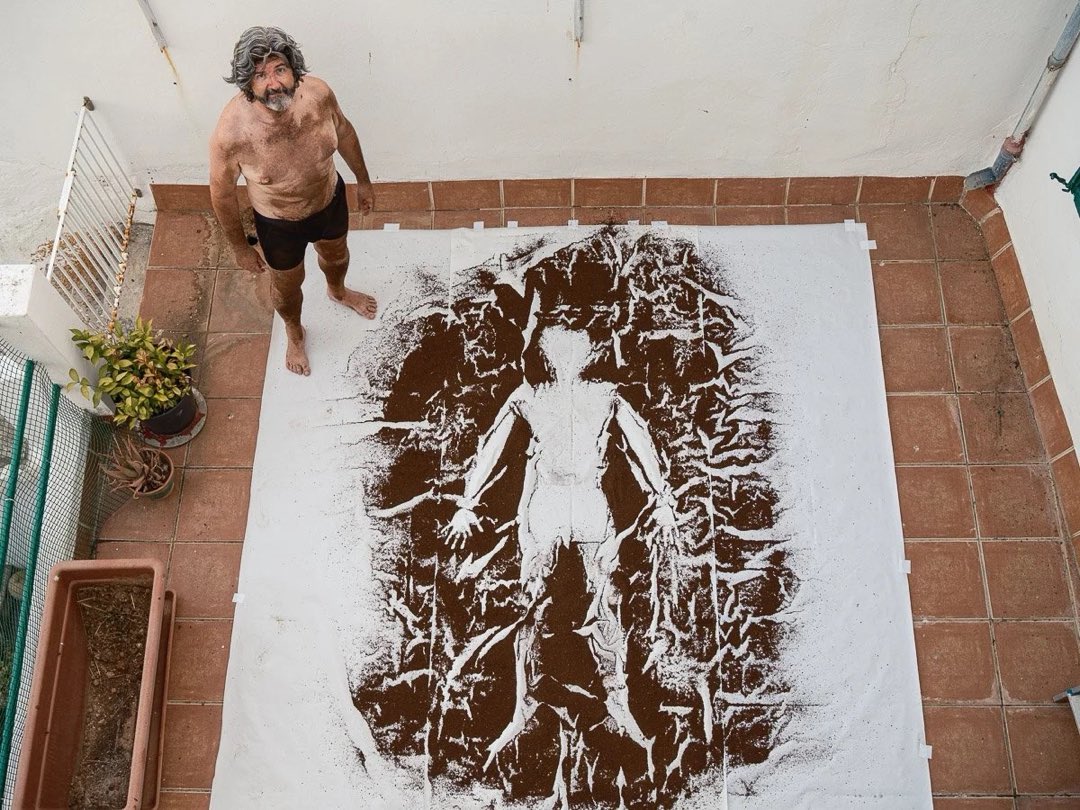
To make Corpus Terra, I used earth from Sa Pobla — agricultural earth, fertile, laden with life and memory — and mixed it with a drop of my own blood. From these two elemental materials I made an ink with which to print a human figure that is not a portrait but an imprint. The silhouette comes from a ritual action: I lay down on a sheet of paper of the same dimensions as Velázquez’s canvas (320.3 × 279.1 cm) and was covered with earth, as if for burial. That shadow, that void, becomes the centre of each of the five prints, made at 1:4 scale as a limited screenprint edition.
This work is not about portraiture but about passage, about the trace — about what fades and what stays. It is a presence no longer seen, yet without which nothing would have been possible.
The process
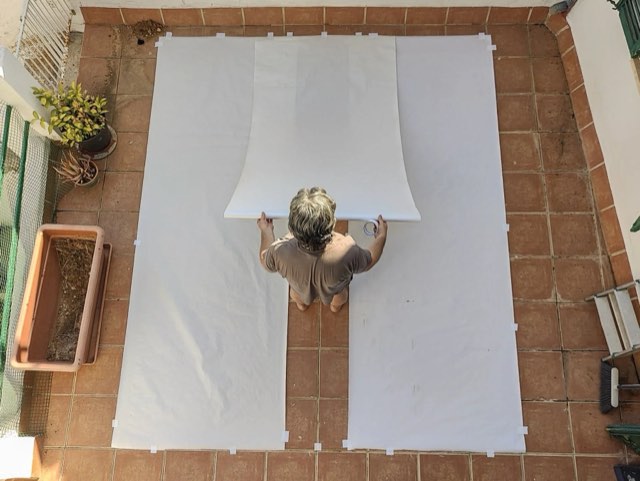
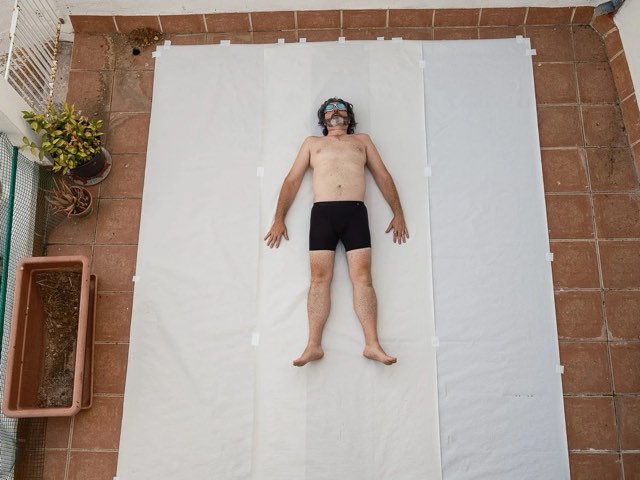
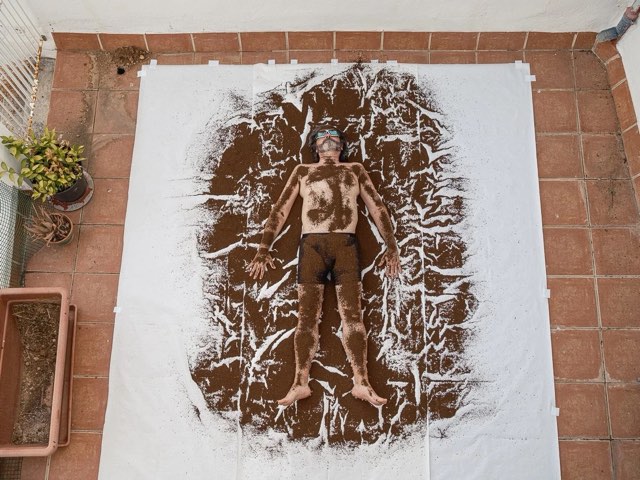
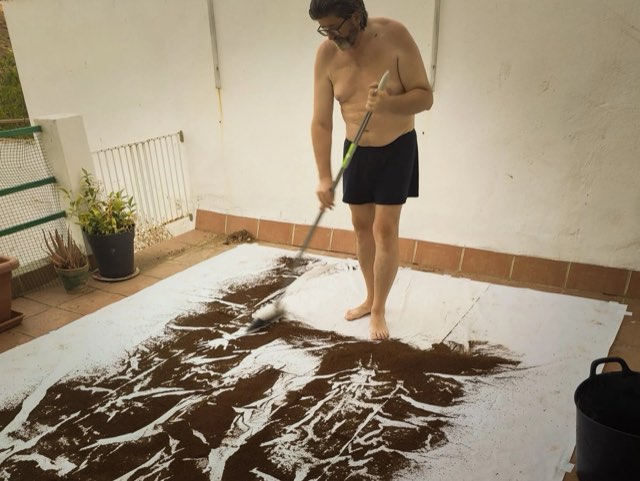
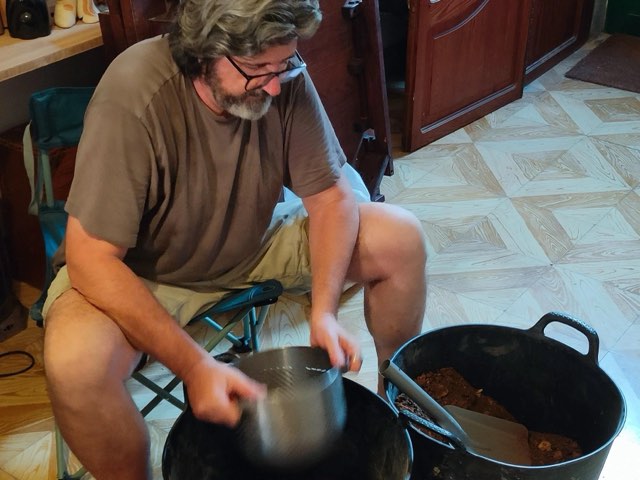
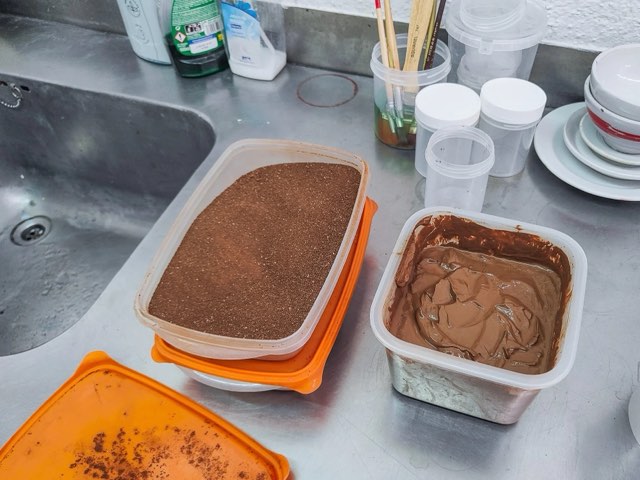
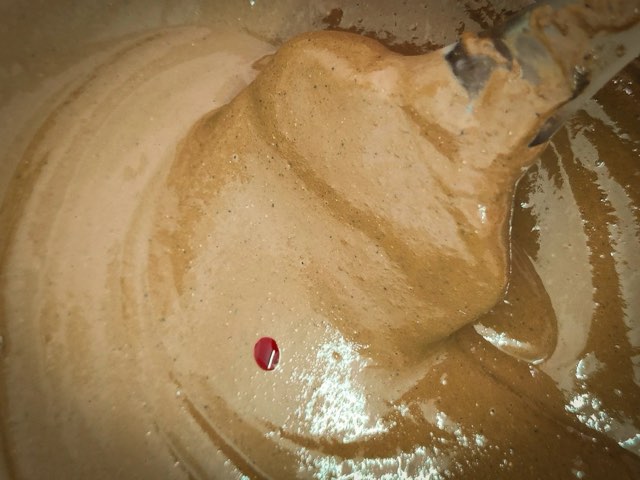
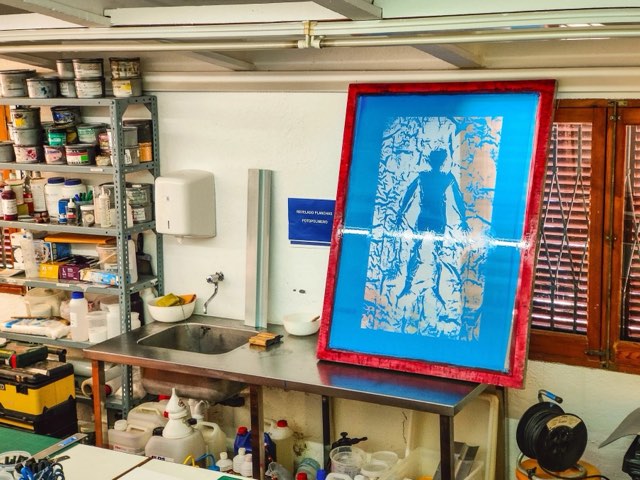
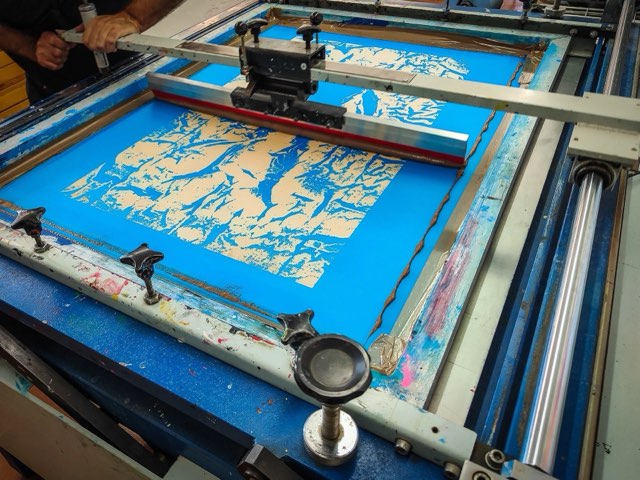
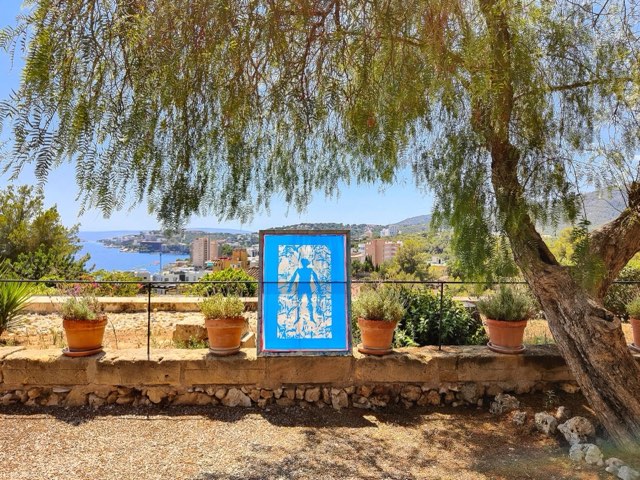
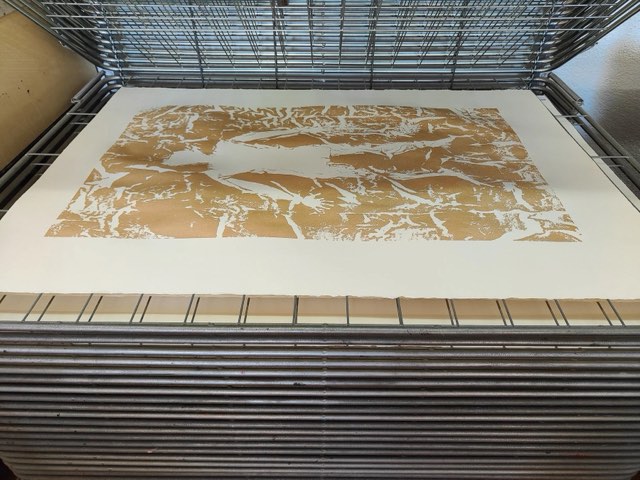
The making of Corpus Terra, Sa Pobla, 2025 — the ritual action, the earth-and-blood ink, and the silkscreen edition. Five prints at 1:4 scale of Las Meninas (original: 320.3 × 279.1 cm).
Why José Nieto?
We all know the great protagonists of Las Meninas: the infanta, the ladies-in-waiting, Velázquez himself, and the reflection of the king and queen at the back. But at the far end of the painting, almost out of place, there is a man at an open door. That man is José Nieto, keeper of the royal apartments. He is not a noble, not an artist, not a child. And yet it is he who occupies the vanishing point, the centre of the perspective, the exit and entry of the light.
When I began to study Las Meninas with the idea of making a contemporary work inspired by the painting, everyone’s attention went to the infanta or to Velázquez. I became obsessed with the figure nobody knows. What is he doing there? Is he coming in? Leaving? Or simply watching? We do not know. And that not-knowing is what captivated me most. José Nieto represents the moment before action, the instant of pure awareness — of simply being. He is the one who holds the space without claiming it.
When the hearts of the principal figures are plotted on the painting, they have been seen to form the structure of a constellation — and curiously it is Nieto’s heart that balances the shape. He is the hidden emotional centre of the picture. That symbolic detail confirmed my decision to place him at the core of the project.
Corpus Terra does not seek to recreate the painting, but to open a new reading from absence — from the figure no one looks at, yet who holds the whole composition. It also speaks of the artist, who like Nieto so often stands at the threshold, between presence and fading, between the gesture and disappearance. Without Nieto’s passage, the painting has no way out. Without the artist’s passage, there is no work.
Where to see it
- Exhibition
- De Meninas Va — touring group exhibition, Illes Balears
- Now on view
- Sala de Plens, Ajuntament d’Andratx, Mallorca
- From October
- Sala del Rosser, Ciutadella, Menorca
- 2026 tour
- Casa de Cultura, Felanitx · Centre d’Art Sa Quartera, Inca · Sant Crist, S’Arracó · Sala de Plens, Ajuntament d’Andratx
- First shown
- Es Corro, Sa Pobla, 2025